
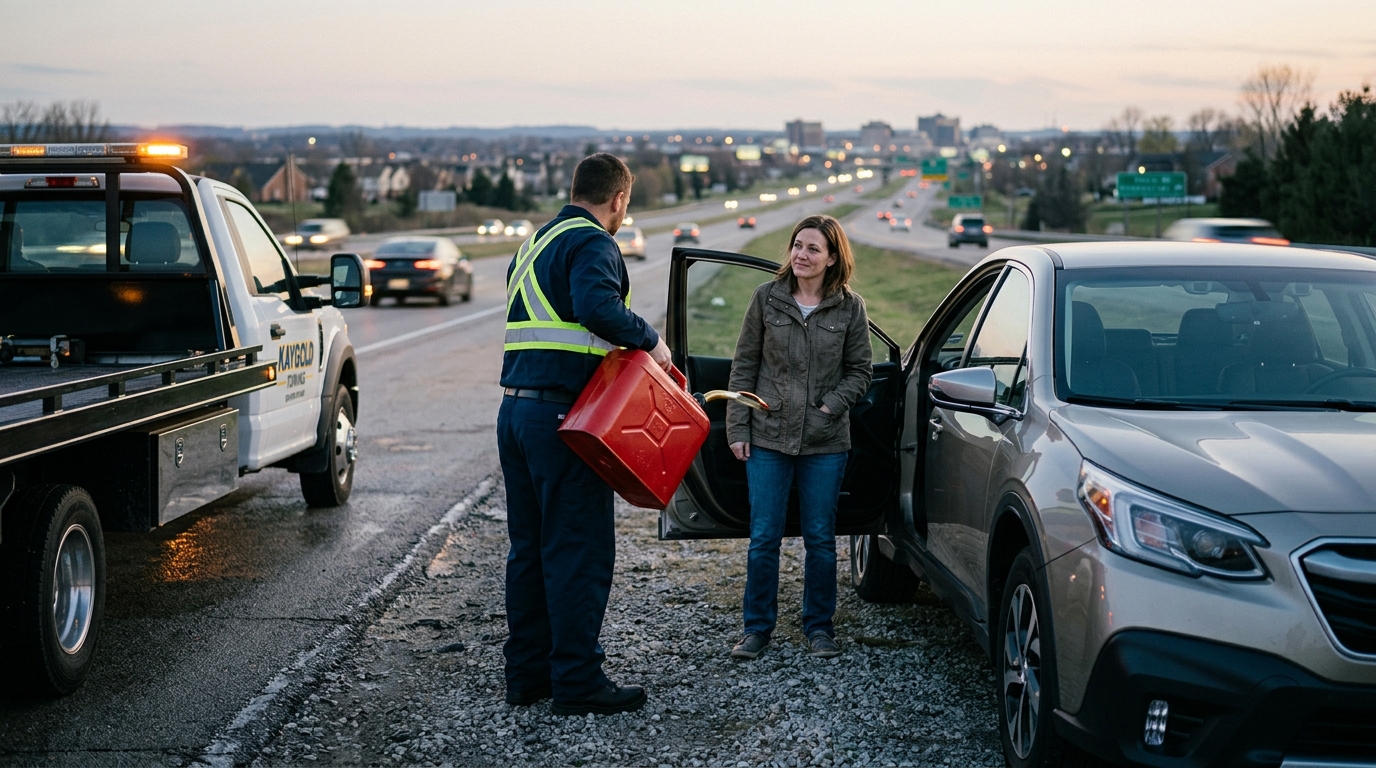
When your fuel light turns on and you run dry on a Dayton highway, the immediate question is who can actually bring fuel to your location. In Dayton, Ohio, fuel delivery is primarily handled by roadside assistance programs, insurance providers, and specialized mobile fuel services. Kaygold Towing Service, a DOT-registered operator in Dayton, focuses on emergency towing and roadside support, ensuring that drivers have a reliable, 24/7 contact point for vehicle recovery and assistance. For additional details, review the .
Fuel Delivery Providers in Dayton
Fuel delivery is a specialized roadside service that involves transporting gasoline or diesel directly to a vehicle that has run out of fuel. In the Dayton, Ohio area, this service is typically provided by three main categories of operators: national roadside assistance networks, local independent towing companies, and insurance-affiliated service providers. Each category operates with different response times, coverage areas, and cost structures. For additional details, review the Customer Experience.
National Roadside Assistance Networks
National networks such as AAA and major credit card assistance programs often include fuel delivery as a core benefit. These providers maintain a network of contracted local vendors who perform the actual delivery. When you call a national number, the request is routed to the nearest available vendor in the Dayton metro area. This model ensures broad coverage but may result in variable response times depending on the specific vendor assigned to your location.
Local Independent Towing Companies
Local independent operators, such as Kaygold Towing Service, provide direct, owner-operated assistance. These businesses are often DOT-registered and fully insured, offering a transparent and accountable service. While some local tow companies may not carry fuel cans on every truck, they can often coordinate with local fuel vendors or provide a tow to the nearest gas station if direct delivery is not available. This direct line of communication ensures that the person answering the phone is the same person driving the truck.
Insurance-Affiliated Providers
Many auto insurance policies include roadside assistance as an add-on or standard feature. These providers act as intermediaries, connecting policyholders with a network of approved service providers. The advantage of this model is that the cost is often covered by the insurance policy, reducing out-of-pocket expenses for the driver. However, the specific vendor that arrives may vary, and the scope of services (such as the amount of fuel delivered) may be limited by the policy terms.
How Fuel Delivery Works
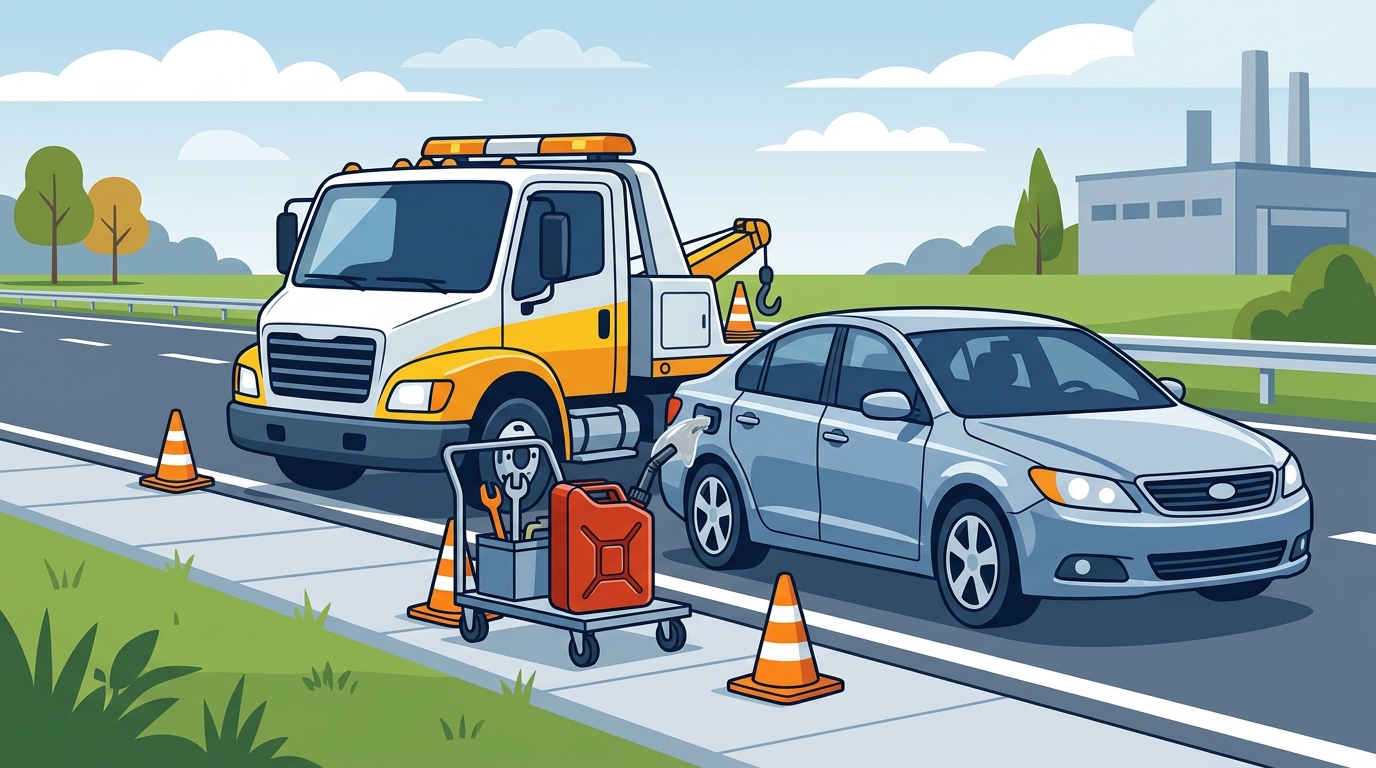
Understanding the mechanics of fuel delivery helps drivers set realistic expectations and prepare for the arrival of the service provider. The process generally follows a standardized sequence from initial contact to final handover.
Initial Contact and Dispatch
The process begins when the driver calls the service provider. The dispatcher will ask for your exact location, vehicle make and model, and the type of fuel required. In Dayton, precise location details are crucial due to the mix of urban streets and highway interchanges. The dispatcher then assigns the nearest available technician or vendor to your location.
Arrival and Verification
Upon arrival, the service provider will verify your identity and the vehicle details. This step is a standard security protocol to ensure that the fuel is delivered to the correct vehicle and authorized individual. The provider will also assess the condition of the vehicle to ensure it is safe to refuel.
Fuel Transfer and Payment
The provider will transfer a limited amount of fuel, typically enough to reach the nearest gas station. This is a safety measure to prevent overfilling and potential spills. Payment is usually required at the time of service, either through cash, credit card, or insurance billing if covered. The provider will provide a receipt detailing the amount of fuel delivered and any service fees.
Insurance and Roadside Assistance Coverage
Many drivers in Dayton are unaware of the extent of their existing coverage. Before calling a third-party provider, it is wise to check your auto insurance policy or credit card benefits. These programs often cover fuel delivery, lockout services, and battery jumps at no additional cost to the driver.
Checking Your Policy
Review your insurance declaration page or roadside assistance card to confirm coverage. Look for specific terms regarding fuel delivery, such as the maximum amount of fuel covered and any mileage limits for towing. If your policy includes roadside assistance, you will have a dedicated phone number to call in an emergency. This number is often different from your main insurance claims line.
Understanding Coverage Limits
Most insurance policies cover a small amount of fuel, usually between 2 to 5 gallons. This is intended to get you to the nearest gas station, not to fill the tank. If you require more fuel, you will likely need to pay the difference out of pocket. Additionally, some policies may exclude fuel delivery if the vehicle was not properly maintained or if the driver was at fault in an accident.
Safety Considerations for Stranded Drivers
Running out of fuel can be a stressful and potentially dangerous situation, especially on busy Dayton highways. Prioritizing safety is the first step before waiting for assistance.
Positioning Your Vehicle
If possible, pull your vehicle completely off the roadway and onto the shoulder. Turn on your hazard lights to alert other drivers. If you are on a highway and cannot move the vehicle to a safe location, stay inside the car with your seatbelt on until help arrives. Do not stand near the vehicle or walk along the highway to find a gas station.
Waiting for Assistance
Once you have called for help, stay in a safe location. If you are in a safe area, you may step out of the vehicle, but always stand behind the guardrail or in a well-lit area. Keep your phone charged and within reach. If you are with passengers, ensure they are also in a safe location. Avoid using open flames or smoking near the vehicle, as gasoline vapors are highly flammable.
Comparison of Assistance Options
The following table summarizes the key differences between the main types of fuel delivery providers available in Dayton, Ohio.
| Provider Type | Response Time | Cost Structure | Best For |
|---|---|---|---|
| National Roadside Assistance | Variable (30-60 mins) | Membership Fee or Per-Service | Drivers with existing memberships |
| Local Independent Towing | Fast (20-45 mins) | Per-Service Fee | Drivers needing direct, local support |
| Insurance-Affiliated | Variable (30-90 mins) | Covered by Policy | Policyholders with roadside coverage |
Key Takeaways
- Fuel delivery in Dayton is provided by national networks, local independent operators, and insurance affiliates.
- Local operators like Kaygold Towing Service offer direct, 24/7 communication with the driver.
- Always check your insurance policy or credit card benefits before calling a third-party provider.
- Most fuel delivery services provide only enough fuel to reach the nearest gas station.
- Safety is paramount: pull over, use hazard lights, and stay in a safe location while waiting.
- Response times vary by provider, with local independents often offering faster service in the Dayton area.
- Keep a list of local emergency numbers in your vehicle for quick access during a breakdown.
Frequently Asked Questions
Does Kaygold Towing Service deliver gas to stranded cars?
Kaygold Towing Service is a DOT-registered towing and roadside assistance operation in Dayton, Ohio. While their primary focus is on emergency towing and recovery, they provide 24/7 dispatch and can assist drivers in coordinating fuel delivery or towing to the nearest gas station. For specific fuel delivery availability, it is best to call their dispatch line directly.
How much does fuel delivery cost in Dayton?
Costs vary by provider. National roadside assistance programs may charge a per-service fee if you are not a member. Local independent operators typically charge a service call fee plus the cost of the fuel. Insurance-affiliated providers may cover the cost if you have roadside assistance coverage. It is advisable to ask for an estimate before the service begins.
How long does it take for fuel delivery to arrive?
Response times in Dayton typically range from 20 to 90 minutes, depending on the provider and your exact location. Local independent operators often have faster response times due to their proximity to the incident. National networks may take longer as they route the request to a contracted vendor.
Can I get a full tank of gas delivered?
Most fuel delivery services will only provide a limited amount of fuel, usually between 2 to 5 gallons. This is a safety measure to prevent overfilling and spills. The goal is to get you to the nearest gas station, not to fill the tank. If you require a full tank, you will likely need to tow the vehicle to a gas station.
What should I do if I run out of gas on a highway?
If you run out of gas on a highway, pull over as far to the right as possible and turn on your hazard lights. If you cannot move the vehicle to a safe location, stay inside the car with your seatbelt on. Call for roadside assistance and wait for help to arrive. Do not walk along the highway to find a gas station.
Is fuel delivery covered by my auto insurance?
Many auto insurance policies include roadside assistance as an add-on or standard feature, which may cover fuel delivery. Check your policy declaration page to confirm coverage. If covered, you will have a dedicated phone number to call in an emergency. The cost is typically covered by the insurance policy, reducing out-of-pocket expenses.
How can I prevent running out of gas in the future?
To prevent running out of gas, keep your fuel tank at least half full, especially when traveling long distances. Monitor your fuel gauge and plan your route to include gas stations. Keep a list of local gas stations and emergency numbers in your vehicle. Regular maintenance of your fuel system can also help prevent unexpected issues.
What is the difference between towing and fuel delivery?
Towing involves moving a vehicle that is unable to drive to a repair shop or gas station. Fuel delivery involves bringing fuel to a vehicle that has run out of gas. Towing is typically required if the vehicle is in a dangerous location or if the fuel tank is completely empty and cannot be safely refueled on the spot. Fuel delivery is a quicker solution if the vehicle is in a safe location.
Conclusion
Knowing who delivers gas to a stranded car in Dayton, Ohio, is a critical part of being a prepared driver. Whether you rely on national roadside assistance, insurance coverage, or local independent operators, having a clear plan ensures that you can get back on the road safely and quickly. Kaygold Towing Service stands ready to provide 24/7 support for your vehicle recovery needs in the Dayton area. If you find yourself stranded, do not hesitate to reach out for professional assistance.