
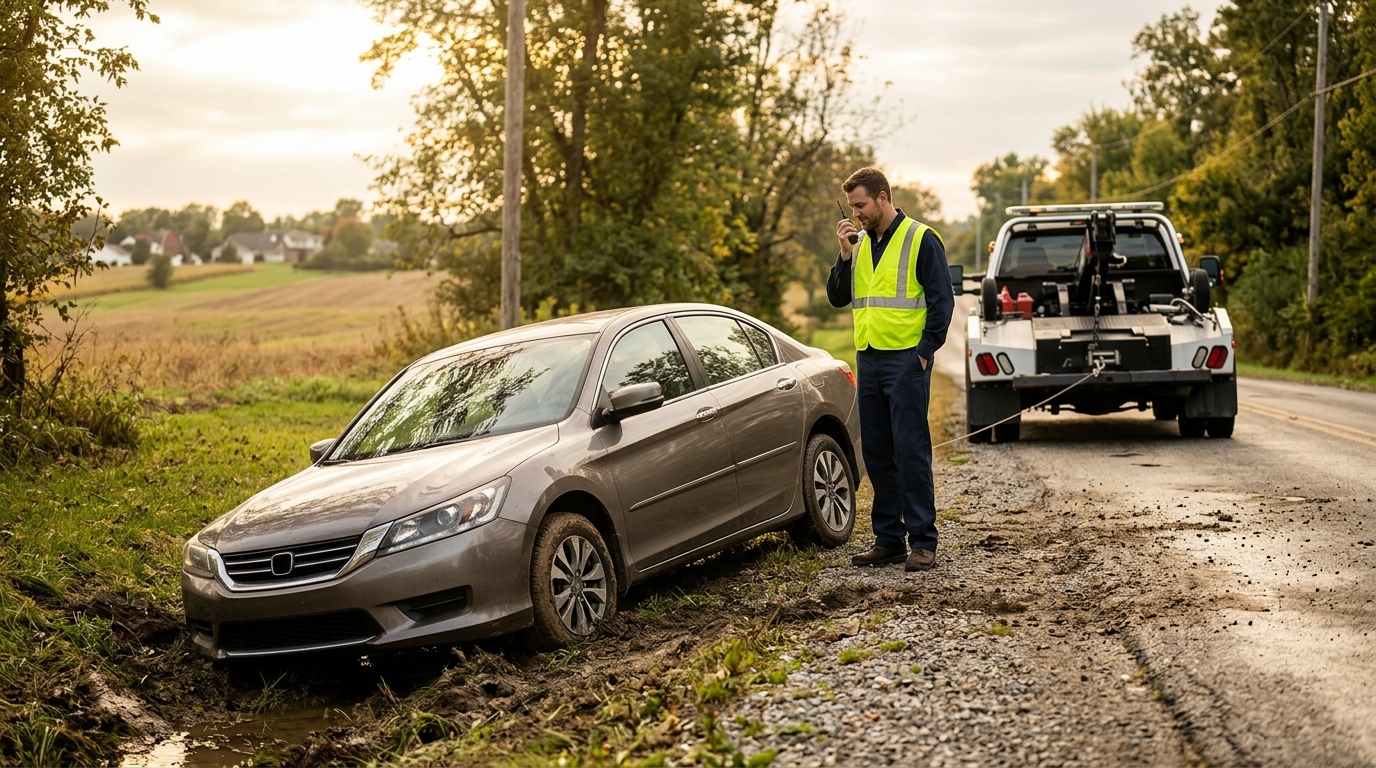
When a vehicle slides off the road into a ditch in Dayton, Ohio, the primary entity capable of performing the recovery is a licensed, DOT-registered towing and roadside assistance provider equipped with the appropriate winch or flatbed apparatus. Kaygold Towing Service operates as a 24/7, owner-operated recovery specialist in the Dayton area, ensuring that drivers have direct access to the professional actually driving the truck. This guide details the specific recovery methods, the regulatory requirements for local operators, and the practical steps Dayton motorists should take to secure safe and efficient vehicle extraction.
Ditch Recovery Services
Ditch recovery is a specialized subset of roadside assistance that involves extracting a vehicle from an off-road position, such as a drainage ditch, embankment, or soft shoulder. Unlike a standard flat tire change or battery jump, ditch recovery requires an assessment of the vehicle's suspension, undercarriage, and the terrain's stability. The primary goal is to restore the vehicle to a drivable state without causing secondary damage to the frame or drivetrain.
Assessment and Safety Protocols
Equipment Variations
Recovery equipment varies based on the vehicle's weight and the nature of the entrapment. Light-duty trucks often utilize a rear-mounted winch, while heavier vehicles or those in deep ditches may require a tow truck with a hydraulic boom or a flatbed. The choice of equipment is dictated by the physics of the situation. A winch provides a direct line of force, which is ideal for shallow ditches with firm ground. A flatbed, conversely, lifts the vehicle entirely, eliminating the risk of dragging the undercarriage across rough terrain.
Winch Out Procedures
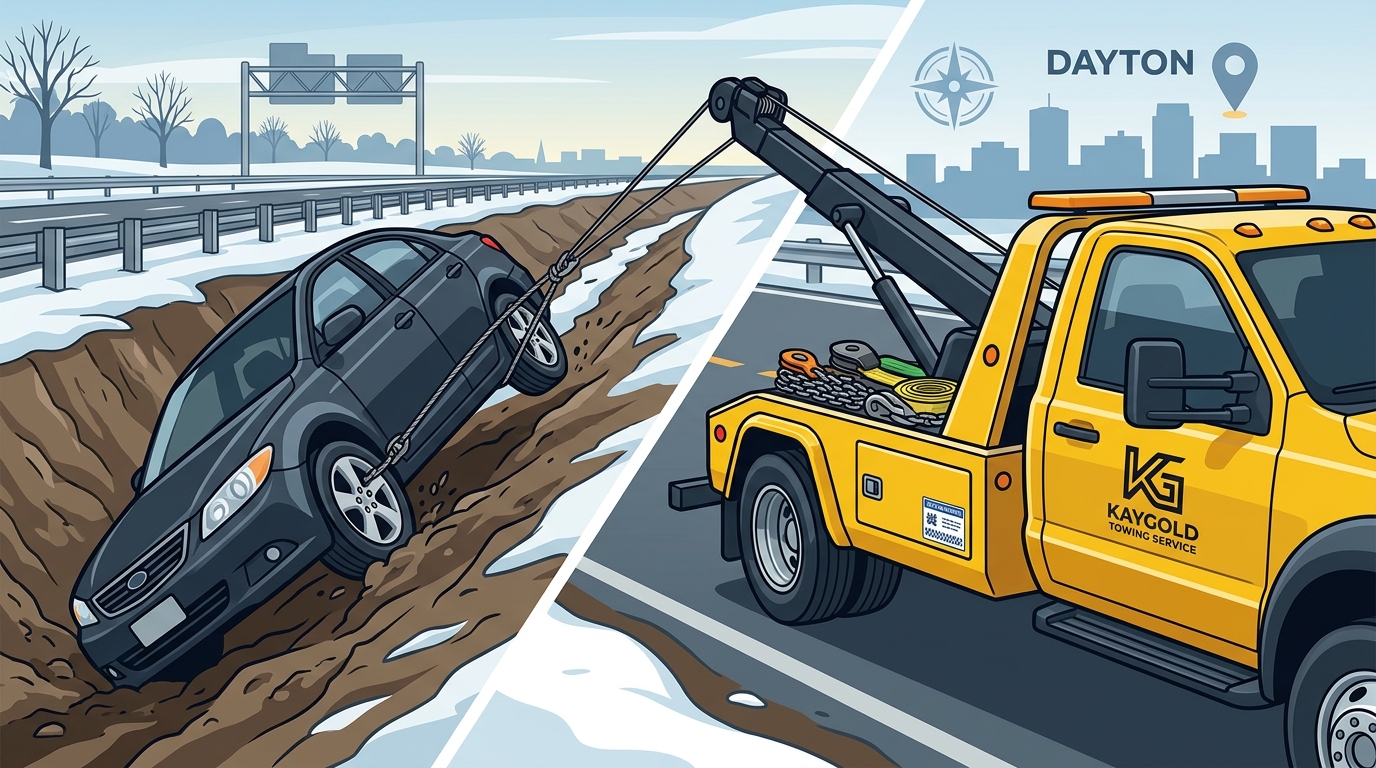
A winch out is a mechanical process where a cable or synthetic rope is attached to a secure anchor point on the vehicle and pulled by a powered drum. This method is the most common technique for vehicles that have slid into a shallow ditch or soft shoulder. The procedure requires precision to ensure the force is applied correctly and safely.
Attachment and Anchor Points
The operator must identify a strong, non-structural point on the vehicle to attach the winch hook. This is typically a dedicated tow hook or a reinforced frame member. Attaching the hook to a bumper, light bracket, or exhaust pipe is strictly prohibited, as these components can shear off under tension. The operator must also ensure the vehicle is in neutral or park, with the parking brake disengaged, to allow the vehicle to move freely once the winch engages.
Line of Pull and Tension
The angle of the winch cable is critical. The line of pull should be as close to horizontal as possible to minimize the vertical force that could lift the vehicle's nose or tail. If the angle is too steep, the vehicle may tip or the suspension may be overstressed. The operator applies tension gradually, monitoring the vehicle's movement. If the vehicle does not move, the operator must stop and reassess, as forcing the winch can snap the cable or damage the winch motor.
Common Errors to Avoid
One of the most common errors in winch out procedures is the failure to clear the path of the vehicle. If the vehicle is pulled toward an obstacle, such as a tree or a guardrail, the recovery will fail and may cause significant damage. The operator must ensure a clear path to the road. Additionally, the operator must stand clear of the cable's path, as a snapping cable can cause severe injury. Professional operators are trained to manage these risks, which is why relying on a licensed service is essential.
Dayton Towing Companies
The Dayton, Ohio, region is served by a variety of towing and roadside assistance providers. However, not all companies are equipped or licensed to handle complex ditch recoveries. When selecting a provider, drivers should look for specific credentials and operational capabilities that ensure a safe and efficient outcome.
Regulatory and Operational Standards
In Ohio, towing operators are subject to specific regulatory standards, including DOT registration for commercial vehicles. A DOT-registered carrier is required to maintain certain safety and operational protocols, which provides an additional layer of assurance for the consumer. Kaygold Towing Service is a DOT-registered, owner-operated business, meaning the person answering the phone is the same person driving the truck. This direct line of communication is a significant advantage in emergency situations, as it reduces the delay often associated with large dispatch centers.
Comparison of Service Models
The table below compares the operational models of different types of towing providers in the Dayton area. This comparison helps drivers understand what to expect when they call for help.
| Provider Type | Response Time | Communication | Equipment Flexibility | Best For |
|---|---|---|---|---|
| Owner-Operated (e.g., Kaygold) | Fast, direct dispatch | Direct with driver | High, tailored to vehicle | Complex recoveries, ditches |
| Large National Franchise | Variable, dispatch center | Indirect, call center | Standardized fleet | Standard flatbed tows |
| Local Independent | Variable, depends on load | Direct or indirect | Moderate | General roadside assistance |
Why Owner-Operated Matters
For ditch recoveries, the flexibility of an owner-operated business is a key differentiator. Large franchises often have rigid protocols that may not account for the unique challenges of an off-road entrapment. An owner-operator can make real-time decisions based on the specific conditions of the ditch and the vehicle. This adaptability is crucial for ensuring the vehicle is recovered safely and efficiently. Kaygold Towing Service emphasizes this direct, hands-on approach, ensuring that drivers in Dayton and surrounding areas receive personalized attention during their most stressful moments.
Key Takeaways
- Ditch recovery is a specialized service that requires assessment of the vehicle and terrain before any equipment is used.
- Winch out procedures require precise attachment to reinforced frame points and a horizontal line of pull to prevent damage.
- DOT registration is a key indicator of a professional towing operator, ensuring adherence to safety and operational standards.
- Owner-operated businesses like Kaygold Towing Service offer direct communication with the driver, reducing delays and improving coordination.
- Improper winching can cause severe structural damage, making professional intervention essential for complex recoveries.
- Drivers should always ensure a clear path for the vehicle before the winch is engaged to avoid collisions with obstacles.
- 24/7 availability is critical, as ditch entrapments can occur at any time, including late at night or during severe weather.
- Choosing a local, insured provider ensures that the operator is familiar with the specific terrain and road conditions in the Dayton area.
Frequently Asked Questions
What is the difference between a winch out and a flatbed tow?
A winch out uses a cable to pull the vehicle back onto the road, which is suitable for shallow ditches with firm ground. A flatbed tow lifts the vehicle entirely onto a truck bed, which is necessary for deep ditches, soft mud, or vehicles with significant undercarriage damage.
How long does a ditch recovery take?
The duration depends on the complexity of the entrapment. A simple winch out may take 15 to 30 minutes, while a complex recovery requiring a flatbed or additional equipment can take an hour or more. The operator will provide an estimate upon arrival.
Is it safe to winch my own car out of a ditch?
It is generally not recommended for the average driver. Improper attachment or tension can cause severe damage to the vehicle or result in personal injury. Professional operators have the training and equipment to perform the recovery safely.
What should I do while waiting for the tow truck?
Move to a safe location away from traffic, activate your hazard lights, and stay with your vehicle if it is safe to do so. Do not attempt to push the vehicle or use makeshift tools to pull it out, as this can worsen the situation.
Does Kaygold Towing Service operate 24/7?
Yes, Kaygold Towing Service is available around the clock, 24/7/365, ensuring that drivers in Dayton and surrounding areas can receive assistance at any time.
What is DOT registration for towing companies?
DOT registration is a federal requirement for commercial motor vehicles that operate in interstate commerce. It ensures that the operator meets specific safety, maintenance, and operational standards, providing an additional layer of assurance for consumers.
Can a winch out damage my car?
If performed incorrectly, a winch out can damage the vehicle's suspension, frame, or undercarriage. Professional operators use proper techniques and equipment to minimize the risk of damage, ensuring the vehicle is recovered safely.
How do I choose the right towing company in Dayton?
Look for a provider that is DOT-registered, insured, and offers 24/7 availability. An owner-operated business like Kaygold Towing Service is often a good choice, as it ensures direct communication with the driver and flexible, personalized service.
Conclusion
When your vehicle ends up in a ditch in Dayton, the choice of recovery provider is critical. You need a professional who understands the mechanics of winch out procedures, the regulatory requirements of DOT registration, and the specific terrain of the local area. Kaygold Towing Service stands out as a reliable, 24/7 resource for Dayton motorists, offering direct, owner-operated assistance that prioritizes safety and efficiency. By choosing a licensed, local expert, you ensure that your vehicle is recovered with minimal risk and maximum care. If you find yourself in an off-road predicament, do not hesitate to reach out to a qualified professional. Contact Kaygold Towing Service for immediate, round-the-clock assistance in Dayton and surrounding Ohio communities.