
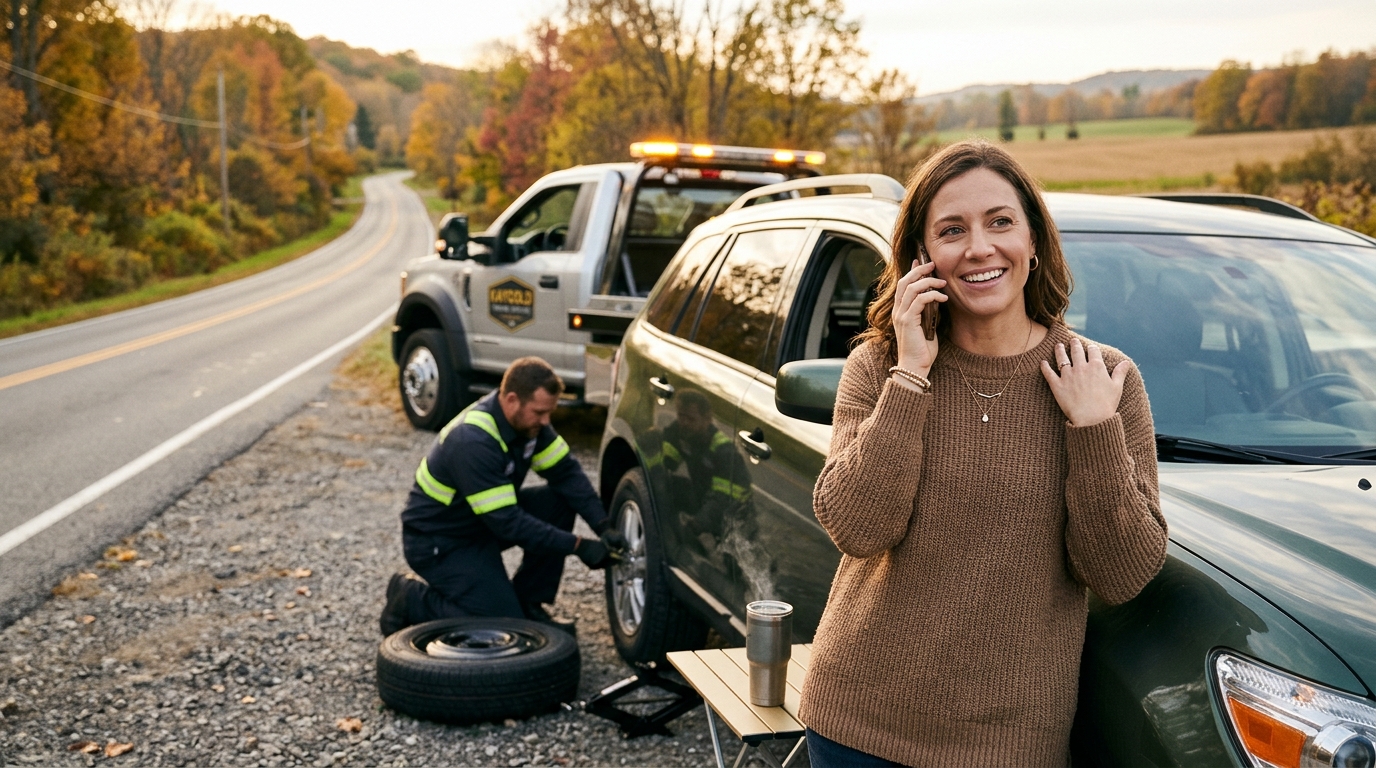
What Exactly Does Roadside Assistance Coverage Include in Your Insurance Policy?
Roadside assistance coverage is a specific insurance add-on that pays for emergency help when your vehicle breaks down, such as jump starts, lockouts, and flat tire changes. It typically does not cover routine maintenance or major mechanical repairs. Understanding these limits helps you know when to call your insurer versus when to hire a local provider like Kaygold Towing Service for immediate, on-the-spot help.
The Core Services Covered by Standard Policies
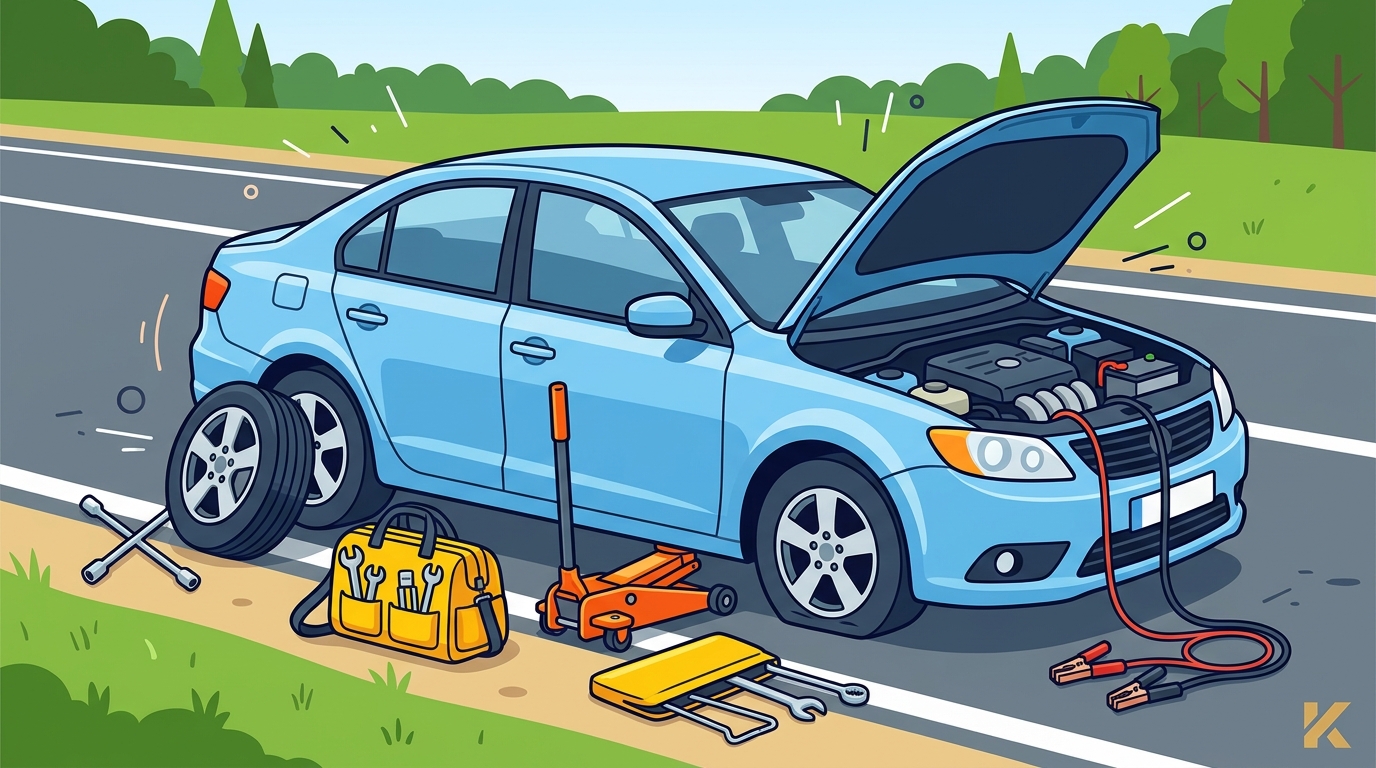
Most insurance policies define roadside assistance as a set of specific, minor interventions designed to get you moving again or to a safe location. The most common inclusions are jump starts for dead batteries, unlocking doors when keys are locked inside, and changing a flat tire with your spare. These are the baseline services that nearly every provider, including Kaygold Towing Service, handles on a daily basis. according to Roadside assistance
Another standard inclusion is fuel delivery. If you run out of gas, your policy will usually cover bringing a small amount of fuel to your vehicle so you can reach the nearest station. It is important to note that this is a delivery service, not a reimbursement for the gas itself. The goal is to get you to a place where you can refuel properly.
Towing Limits and Distance Restrictions
It is critical to read your policy's definition of a "qualified repair facility." Some policies only cover towing to shops that are on their approved network. If you want to go to a specific mechanic you trust, you may need to pay out of pocket. Emergency towing services like those offered by Kaygold Towing Service can help you navigate these situations by providing transparent quotes before the truck arrives.
Another key restriction is the type of vehicle being towed. Standard policies often exclude specialty vehicles, such as low-clearance sports cars or large commercial trucks, from standard wheel-lift towing. For these vehicles, flatbed towing is required, which may not be covered under a basic roadside assistance plan. Always check if your policy specifies the towing method.
Common Exclusions and What Is Not Covered
Roadside assistance is not a comprehensive repair plan. It explicitly excludes any service that involves replacing parts or performing mechanical work. If your battery is dead because it is old and failing, a jump start is covered, but the cost of a new battery is not. Similarly, if your tire is flat due to a nail, the tire change is covered, but the cost of a new tire or repair is your responsibility.
Weather-related damage is another common exclusion. If your car is stuck in deep snow or mud, some policies will cover a winch-out, but others may exclude it entirely, citing that it is a driver error or environmental condition. Winch-out services are a specialized skill, and not all insurance-approved providers offer them. Knowing this exclusion helps you decide whether to call your insurer or a local expert directly.
Finally, coverage often has a cap on the number of calls per year. Most policies limit you to two or three roadside assistance calls annually. If you exceed this limit, you will be billed for the full cost of the service. Keeping track of your usage is essential to avoid unexpected bills at the end of the year.
Insurance Providers vs. Local Towing Companies
When you call your insurance company for roadside assistance, you are usually routed to a third-party dispatch center. This center then assigns a local towing company to your job. This middleman layer can cause delays and communication issues. You may not know who is coming, how long they will take, or what the final cost will be if your coverage runs out.
Using a local provider also gives you more control over where your vehicle is taken. If your insurance policy restricts you to a specific shop, but you prefer a different one, calling a local tow company directly allows you to negotiate the destination and cost upfront. This flexibility is often lost when you go through an insurance dispatch center.
How to Check Your Specific Policy Details
The best way to understand your coverage is to read the specific language in your insurance policy declaration page. Look for the section titled "Roadside Assistance" or "Breakdown Coverage." This section will list the exact services included, the distance limits for towing, and any exclusions that apply to your vehicle type.
If the language is confusing, call your insurance agent and ask specific questions. Ask them to clarify what happens if the nearest shop is beyond the covered distance. Ask if flatbed towing is included for your specific vehicle. Ask how many calls you have used this year. Having these answers written down ensures you are not caught off guard when you need help.
Understanding your policy is the first step in managing a breakdown effectively. It allows you to make informed decisions about whether to use your insurance or call a local provider. For drivers in the Dayton area, local towing services provide a reliable backup when insurance coverage falls short.
Key Takeaways
- Roadside assistance typically covers jump starts, lockouts, flat tire changes, and small fuel deliveries.
- Towing coverage is usually limited to a specific distance, often between 5 and 25 miles.
- Major mechanical repairs and part replacements are never covered by roadside assistance.
- Insurance dispatch centers may cause delays compared to calling a local, owner-operated tow company directly.
- Specialty vehicles may require flatbed towing, which is often excluded from basic policies.
- Most policies limit the number of roadside assistance calls per year, so track your usage.
- Always read your policy's definition of a "qualified repair facility" to avoid unexpected costs.
Frequently Asked Questions
Does roadside assistance cover the cost of a new battery?
No, roadside assistance covers the jump start to get your car running, but it does not cover the cost of replacing a dead or failing battery. You will need to pay for the new battery and its installation separately.
How far will my insurance tow my car?
Most insurance policies cover towing for a limited distance, typically between 5 and 25 miles, to the nearest qualified repair shop. Check your specific policy for the exact limit and definition of a qualified shop.
Can I choose where my car is towed?
Usually, no. Insurance policies often require that your vehicle be towed to a shop on their approved network. If you want to go to a specific mechanic, you may need to pay the difference or call a local tow company directly.
Is flatbed towing covered under roadside assistance?
It depends on your policy and vehicle. Basic policies often only cover wheel-lift towing. Flatbed towing is usually required for low-clearance or all-wheel-drive vehicles and may be an optional add-on or excluded entirely.
What happens if I exceed my annual call limit?
If you exceed the number of calls allowed by your policy, you will be billed for the full cost of the service. The provider will typically inform you before dispatching if you have reached your limit.
Does roadside assistance cover winch-outs from ditches?
Some policies cover winch-outs, while others exclude them, especially if the vehicle is stuck in mud or snow. Check your policy's exclusions section to see if winch-out services are included.
Conclusion
Understanding what your roadside assistance coverage includes is essential for managing vehicle breakdowns effectively. While insurance provides a safety net for minor issues, it has clear limits on towing distance, service types, and annual usage. For drivers in Dayton and the surrounding Miami Valley, knowing these limits allows you to make informed decisions when you need help. If your coverage is insufficient or you prefer direct communication, Kaygold Towing Service offers 24/7 roadside assistance and towing with transparent pricing and fast response times. When your car breaks down, knowing your options ensures you get the help you need, quickly and safely.