

Local Tow Pricing
Standard Passenger Vehicles
Heavy and Specialty Vehicles
Mileage Based Fees
Calculating Distance Costs
Long Distance Transports
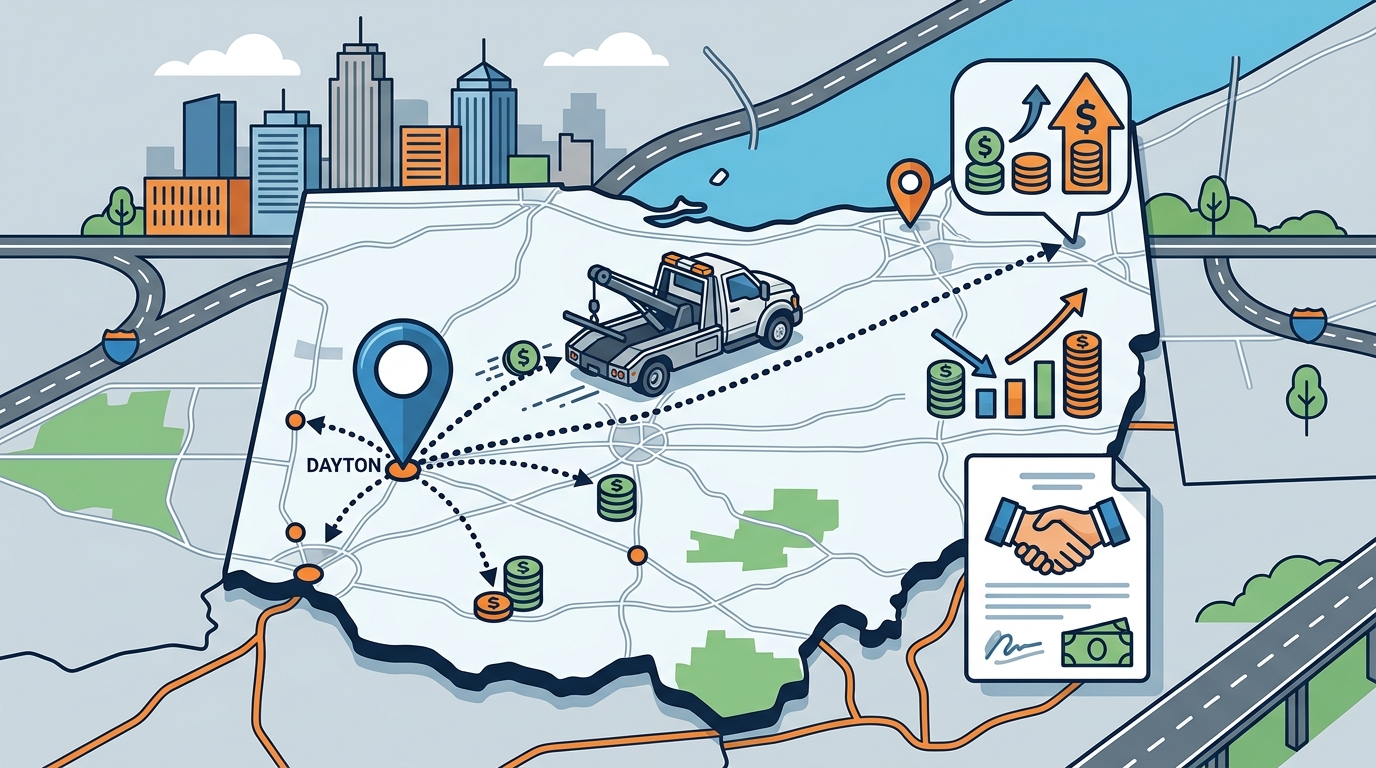
For tows exceeding 50 miles, the per-mile rate may decrease slightly due to the efficiency of the trip. However, the total cost will still be significantly higher than a local move. Drivers planning to transport a vehicle to a different city in Ohio should request a flat rate quote to avoid ambiguity. For additional details, review the .
Service Surcharges
Several factors can add to the base and mileage costs. Service surcharges are additional fees applied for specific conditions or times. The most common surcharge is the after-hours fee, which applies to tows requested between 10 PM and 6 AM. This fee is typically 1.5 to 2 times the standard base rate. Weekend and holiday surcharges may also apply, though these are less common in the Dayton market. For additional details, review the Customer Experience.
After Hours and Weekend Fees
Difficult Access Fees
Service Add Ons
Jump Starts and Fuel Delivery
If the vehicle has a dead battery or is out of gas, a roadside service call is often the most cost-effective solution. These services require less equipment and time than a tow. Drivers should confirm that the tow company offers these services before requesting a full tow. Many operators in Dayton provide these services as part of their roadside assistance package.
Tire Changes and Lockouts
Per Mile Rates
Rate Variations by Vehicle Type
Lighter vehicles are cheaper to tow per mile because they require less fuel and exert less wear on the tow truck. Heavier vehicles, such as pickup trucks and vans, consume more fuel and put more strain on the equipment, resulting in higher per-mile rates. Drivers should always specify their vehicle type when requesting a quote to ensure accuracy.
Distance Tiers
Tow Pricing Structure
The overall tow pricing structure in Dayton is composed of three main elements: the base fee, the mileage fee, and any applicable surcharges or add ons. The base fee covers the dispatch and initial hookup. The mileage fee covers the distance traveled. Surcharges and add ons cover specific conditions or additional services. Understanding this structure helps drivers break down the total cost and identify areas where they might save money.
| Component | Standard Vehicle | Heavy Vehicle | Description |
|---|---|---|---|
| After Hours Surcharge | 1.5x - 2x Base | 1.5x - 2x Base | Applies 10 PM - 6 AM |
How to Read a Tow Invoice
When you receive a tow invoice, look for the breakdown of these components. The base fee should be listed first, followed by the mileage fee. Any surcharges or add ons should be itemized separately. If the invoice does not provide a clear breakdown, ask the operator for a detailed explanation. This ensures that you are only paying for the services you requested.
Ohio Regulatory Caps
Ohio has specific regulations governing towing practices, though there are no strict statewide caps on tow prices. Ohio regulatory caps primarily focus on licensing, insurance, and consumer protection rather than price limits. The Ohio Department of Transportation (ODOT) regulates commercial tow operators, requiring them to be licensed and insured. Local municipalities in Dayton may have additional ordinances that affect towing practices, such as impound fees and storage rates.
Licensing and Insurance Requirements
Impound and Storage Fees
If a vehicle is impounded by law enforcement, the tow cost is often covered by the driver, but storage fees are charged daily. These fees are regulated by local ordinances and can vary by municipality. Drivers should be aware that impound fees can add significantly to the total cost. Always ask about the storage rate when a vehicle is impounded.
Key Takeaways
- After-hours tows can cost 1.5 to 2 times the standard base fee.
- Jump starts and fuel delivery are cheaper alternatives to full tows.
- Always request a detailed quote before dispatching a vehicle.
- Verify that the tow operator is licensed by ODOT.
- Impound storage fees are charged daily and can add to the total cost.
- Heavier vehicles incur higher base fees and per-mile rates.
Frequently Asked Questions
What is the average cost of a tow in Dayton?
Do tow companies charge for after-hours service?
Yes, most tow companies charge a surcharge for after-hours service. This surcharge is typically 1.5 to 2 times the standard base fee. It applies to tows requested between 10 PM and 6 AM.
How much does a jump start cost in Dayton?
Are there price caps on towing in Ohio?
There are no strict statewide price caps on towing in Ohio. However, operators must be licensed by ODOT and follow local ordinances. Prices are determined by market rates and specific service conditions. according to Economy of Ohio
What is the per-mile rate for towing in Dayton?
How can I save money on a tow?
You can save money by requesting a roadside service like a jump start or fuel delivery instead of a full tow. You can also ask for a detailed quote and compare prices from different operators. Always confirm the vehicle type and distance to get an accurate estimate. according to Parking Services University
Is Kaygold Towing Service licensed in Ohio?
Yes, Kaygold Towing Service is a DOT-registered operator. This ensures that the company meets state safety and insurance standards. Drivers can trust that the service is provided by a licensed and insured professional.
Conclusion
Understanding the cost of a tow in Dayton, Ohio, requires knowledge of base fees, mileage rates, and potential surcharges. By breaking down these components, drivers can make informed decisions and avoid unexpected charges. Kaygold Towing Service provides transparent pricing and reliable 24/7 assistance for drivers in the Dayton area. For a personalized quote, today.